Elsinox I don’t know anything about stainless steel. I didn’t even know there was such a thing.
With carbon steel every surface is exposed to corrosion. That is one thing to deal with but you also have contamination. That could be anything from oil to corrosion/rust, dirt, grinding dust, etc. If there’s anything like either of those on the surface of the steel when it is worked that will soon find its way into the middle of the knife.
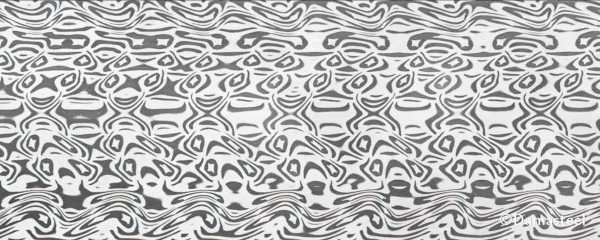
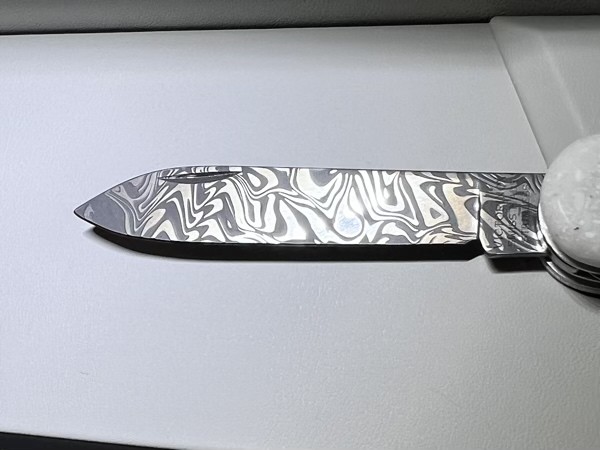
Folding is one way of forging it but designs can also be made by cutting a worked bar in half and flipping it the opposite way around before forge welding them together. Small pieced can also be laid down and contained then forge welded giving a pattern. Forge a long bar and then cut it into 6 or 8 even pieces flipping every second one over that will give you a zig zag pattern. Drill holes partway into the pieces before you stack them, stand on their end, etc. You get the idea, it’s endless. So every edge that was cut could have contamination on the ends from the cutting wheel. Every surface no matter how small has to be cleaned meticulously.
Just like in soldering a flux should be used between the layers to help clean the two or more surfaces that you’re welding. Constantly wire brushing the contaminants off the surface while it’s worked. Consistent temperature across the entire length of steel is very important in order for it all to fuse together. If there’s a slightly cold spot anywhere even very small the pieces deep inside aren’t properly fused. The same thing if it gets too hot. You’ll burn the carbon out of the steel. That bit of garbage steel is buried deep inside. On the outside these knives look great but they’re a failure waiting to happen.
On paper they sound like the perfect design but the reality is I personally wouldn’t trust a hand forged Damascus blade. Factory made steel like the blade steel on these Victorinox knives will have to follow a strict manufacturing standard and it will be tested and optimized. I don’t know if you have industrial standards like ISO9001 there but that’s the standard here most companies follow.
I don’t know how Mora does it but some of their blades, maybe just the old ones are a laminated steel. Essentially a high carbon insert sandwiched between milder outer layers. Back in the 70s and 80s they were referred to as a razor insert by people I know. You could only just see it on the sharpened edge. I have no idea how they made them like that. It did require them to be a certain blade thickness though. I have a bunch of old ones and they are among the sharpest knives I own. They were always very inexpensive too. I never liked the handle design though or the short tang. I do have a couple with a rare factory hand guard. The super hard edge was prone to chipping with abuse.