I’ve recently been thinking about wooden scales and, more specifically, how they are cut and paired.
I’m more familiar with the world of guitars and how figured woods are often used there. Many guitars use what’s called a book matched top when the grain will remain visible through the finish. A block of wood is stood on end, cut in half, and then opened like a book. The two halves are immediately glued together in that orientation before construction continues.
That process is what lives in my head when I think about wood scales.
At first, I didn’t see the need for book matching on knife scales because you can only view one side of the knife at a time anyway. But the more I think about it, the more obvious it becomes that the scales can’t simply be random pieces of wood. Some woods, olive wood especially, can have dramatic contrast and figuring. If the scales weren’t paired intentionally, the knife could end up looking mismatched very easily.
That means the scales likely need to stay together throughout the shaping and finishing process. The blanks would also need to maintain their orientation or the grain direction could look odd once assembled. On the surface that might not seem like a big undertaking, but considering Victorinox production volumes, it actually seems fairly involved.
So now I’m curious about the actual process.
I can think of a few possibilities:
- Long thin blanks are cut into sections, with each scale simply coming from a nearby section of the same piece of wood.
- The blanks are more square shaped, and the scales are cut side by side from the same piece.
- The wood is cut similarly to a book matched guitar top, except the halves are not opened like a book.
Even within the same piece of wood, the grain can vary a lot, so I’m sure Victorinox has given this considerable thought. Whatever method they use seems to work quite well.
Why does this matter? Mostly aesthetics, but also structure to some extent. I’m mainly focused on appearance here. If you look at something like the Wine Master Wood, especially the olive wood versions, some have extremely distinctive grain patterns with dramatic light and dark contrasts that you can see from across the room. For a knife like that to feel premium, the scales almost have to come from the same piece of wood.
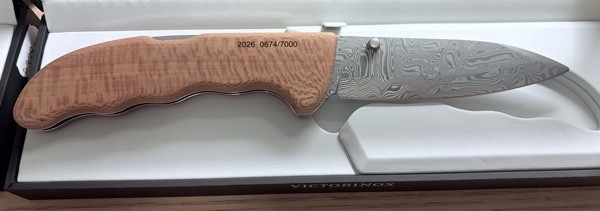
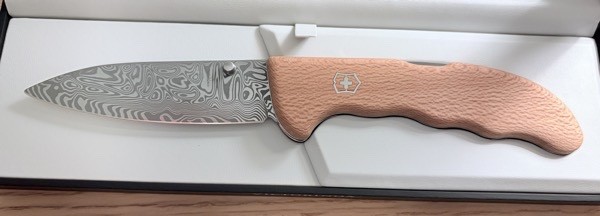
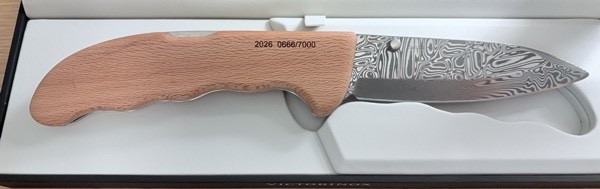
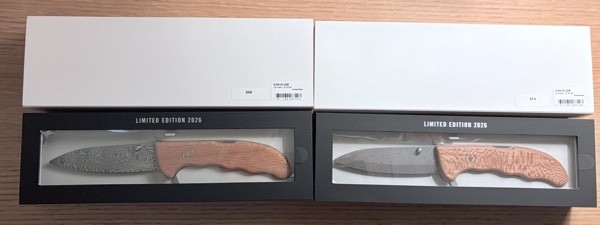
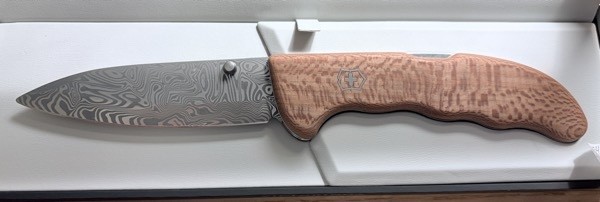
I recently started thinking about all of this while purchasing an Evoke Wood Damast Limited Edition 2026. Will both sides look similar, or will the back side feel completely unrelated? I only own a couple of fairly standard Victorinox wood scaled knives, and thankfully the scales on those looked like they belonged together, but that only made me think about this even more.
I can imagine the limited edition knives receiving extra attention when it comes to matching and pairing scales. But what about the standard wood models? Then I go back to something like the Olive Wood Wine Master. Does Victorinox treat those the same way as the limited editions, or differently from a standard 91mm wood scaled knife?
Has anyone ever actually seen the process?
.